
Our Team
Lab Leaders
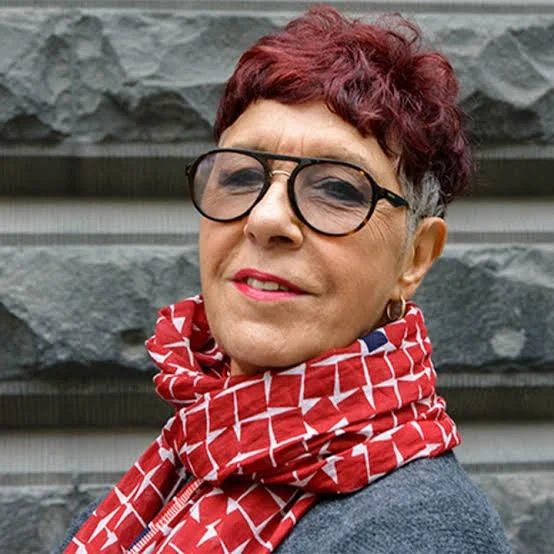
N’arwee’t Professor Carolyn Briggs AM
As a descendant of the First Peoples of Melbourne, the Yaluk-ut Weelam Clan of the Boonwurrung language group and the Wamba Wemba of the Murray River, N’arweet Professor Carolyn Briggs AM is a Senior Elder and the Chairperson and Founder of the Boon Wurrung Foundation and Board Member of the Boonwurrung Land and Sea Council. N’arwee’t is a Professor and Elder in Research within Monash University’s Department of Fine Art. She is currently involved in multiple Australian Research Council-funded projects across several universities. N’arwee’t is a co-founder of the Yulendj Weelam Lab in RMIT’s Architecture & Urban Design School with Dr Jock Gilbert and Associate Professor Christine Phillips.
-
Sophia has extensive experience in consulting for a broad range of stakeholders to ensure projects are delivered to respectively support Indigenous cultural heritage and knowledges. Sophia has worked with and for First Peoples communities across Australia, predominantly in NSW and Victoria.

Barkandji Elder, Aunty Sophia Pearce
Sophia Pearce is a Barkandji sociologist and weaver from far-western NSW, currently undertaking a PhD focused on Barkandji weaving knowledges within RMIT's Architecture & Urban Design School. Sophia’s interest lies in preserving and protecting culture and heritage with particular reference to the management of and repatriation of Barkandji cultural objects and places.
-
N’arwee’t has been involved in developing and supporting opportunities for Indigenous communities throughout Victoria and many other communities around Australia. For over 50 years, she has been proactive in developing strategies for the promotion and maintenance of Boonwurrung culture and heritage. As a result, N’arweet was nominated and appointed as a Member of the National Congress of Australia’s First Peoples and in 2019 was elected a member of the First People’s Assembly of Victoria.

Dr Jock Gilbert
Jock Gilbert is a non-Indigenous registered landscape architect and academic in the School of Architecture and Urban Design at RMIT University. He is a Senior Lecturer in the RMIT Landscape Architecture Discipline and co-leader of the Yulendj Weelam Lab.
His research interests lie in meaningful community engagement, regenerative practice and Indigenous-led design research, focused around the development of green infrastructure through the convergence of concepts of place, Country and landscape.
-
With a wealth of experience working with Traditional Owners, including co-developing and leading with Sophia Pearce (Barkandji consultant), the award-winning ‘Culturally Appropriate First Nations Consultation Report with Barkandji Maljangapa Nation into Indigenous Water Values in the Murray-Darling Basin’ for the NSW Department of Primary Industries and Environment - Water Division, 2020.
Jock has been instrumental in developing an innovative Indigenous-led relational approach for the Yulendj Weelam Lab that is grounded in respect, reciprocity and deep listening.

Associate Professor Christine Phillips
Christine Phillips is a non-Indigenous registered architect and Associate Professor within the RMIT Architecture Program. Christine has extensive experience working with Traditional Owners on Indigenous-led projects that address community aspirations. Christine is currently working on innovative ways of transforming architectural design education to celebrate the 65,000+ years of First Peoples’ culture in Australia. Through her partnerships with First Peoples communities, Christine is connecting and advancing the way architecture students engage with Indigenous knowledges to build their cultural capacity through transformative education experiences.
-
As an architect, Christine has many years of industry experience working with cultural heritage and was a member of the Heritage Council of Victoria where she was part of the Joint Working Group committee with the Victorian Aboriginal Heritage Council of Victoria.
As a Yulendj Weelam Lab leader, she is currently partnering with several large national landscape architecture and architecture practices, building the skills and cultural capacity of design practitioners.
Lab Research Affiliates:
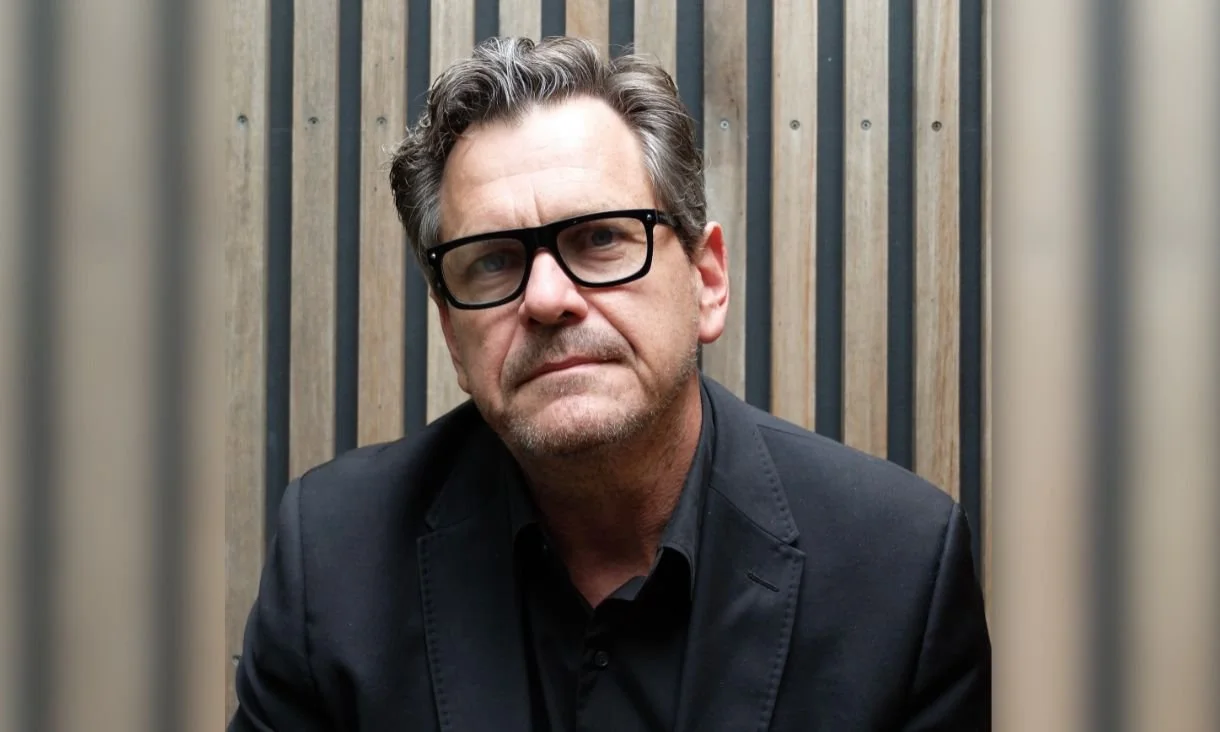
Distinguished Professor Martyn Hook
Professor Martyn Hook is Associate Deputy Vice-Chancellor Engagement (DSC) and Associate Deputy Vice-Chancellor Precincts and Partnerships. Professor Martyn Hook leads College activity in government and industry partnerships as they relate to Learning and Teaching, including Partnered Projects, WIL, Internships and their interface with Research. DSC is one of three academic colleges at RMIT consisting of seven schools and 25,000 students across a broad range of disciplines and with presence in Vietnam, Barcelona, Singapore and China. Martyn has also led University-wide projects in relation to campus development (particularly new types of learning space), digital strategy and student experience.
-
Martyn was previously Dean of the RMIT School of Architecture and Design. He was the founding Director of the Postgraduate Program in Europe, Practice Research Symposium PRS_EU, which gathers a collection of European-based practitioners to engage in research through design practice. This program was the recipient of a major $4M EU Grant under the Marie Curie Actions. Martyn also contributed significantly to the development of the PRSAsia, which commenced at RMIT Vietnam in 2012.
Within his industry focus, Martyn also maintains his role as Director of multi-award winning iredale pedersen hook architects, a studio practice based in Melbourne and Perth, dedicated to appropriate design of effective sustainable buildings with a responsible environmental and social agenda.
As an architect and critic, Martyn has lectured internationally on his own practice and more broadly on Australian architecture in London, Auckland, Bern, Vienna, Ghent, Aarhus, Rome, Kuala Lumpur, Barcelona, the Bauhaus (Dessau) and recently in Chennai and Bangalore. He has been Guest Professor at TU Wien, University of Innsbruck and Hochschule Wismar; and Visiting Critic at the Bartlett School of Architecture UCL; the Mackintosh School of Architecture, Glasgow; Sheffield University; the University of Brighton; Westminster University, London; KU Leuven's Sint Lucas School of Architecture, Ghent; London Metropolitan University; and Auckland University of Technology.
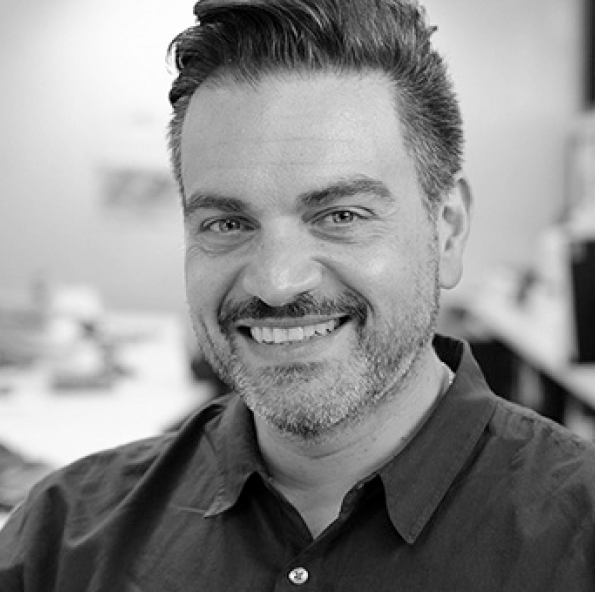
Stasinos Mantzis
Stasinos Mantzis is a talented and passionate architect with diverse experience across a range of scales and typologies. Currently leading Greenshoot’s Conceptual Design for the interpretation of First Peoples’ cultural knowledge and design translation, he fosters meaningful engagement and emphasises reciprocity in the design process. Stas teaches in the Architecture Program at RMIT University, leading architectural design studio classes across both the Bachelors and Masters programs. In recent years, his studio classes have collaborated with First Peoples Elders and community leaders to develop community-led projects. Through these collaborations, he fosters meaningful engagement, translates design concepts, and emphasises reciprocity in the design process.
Lab Support Team:

Caitlyn Parry
Caitlyn is a non-Indigenous design practitioner and Lecturer in the Architecture program in the School of Architecture and Urban Design, RMIT University. Their practice, Mongrel Assemblies, explores the development of digital tools and platforms for the rethinking of inventorying and reassembly of reclaimed construction materials. Their research is interested in digital infrastructures and platforms to enable an expanded view of how materials are quantified; from traditional metrics of the dimensions and transport miles to its provenance and embedded social and cultural narratives.

Helen Duong
Helen is a non-Indigenous Architect and Lecturer in the Architecture program in the School of Architecture and Urban Design, RMIT University.
Her research explores professional ethics and the potential for regulatory mechanisms in architecture to deliver social, economic and environmental benefit, particularly the development of relational processes, projects and measurable outcomes that incorporate Indigenous knowledges. She also explores the effect migrant urbanism, gentrification and multiculturalism has on urban space, form and activities and the potential of retrofitting and designing cities for inclusivity and exchange. As an architect, Helen has many years of industry experience working on civic, institutional, education projects and is a director and registered architect at PanDA.